
Mastering Business Budgeting: A UK Guide for Growth

A budget shouldn’t just tell you what you can’t spend; it should help you decide where growth is affordable. Business budgeting gives you a way to plan expected income and outgoings, set spending and sales goals, and allocate resources. By comparing actual results with your plan, you can spot where things are on track and where adjustments may be needed.
It’s understandable if business budgeting feels like a lot of work, especially when sales fluctuate or unexpected costs arise. A useful budget isn’t a fixed set of figures you must follow regardless of what happens. It’s a practical planning tool that helps you make clearer decisions and respond when circumstances change.
This guide explains why businesses use budgets and how to build one around realistic revenue forecasts, suitable budget types and clear priorities. You’ll also learn how to monitor cash flow, manage common challenges and keep your budget flexible enough to support sustainable growth.
Key Takeaways
- Separate fixed and variable costs, then compare actual spending with your plan to spot overruns and decide where to adjust.
- Forecast revenue from past performance where available; for a new business, use relevant industry costs to shape realistic estimates.
- Choose an operating, capital or cash flow budget according to what you need to plan, and pay attention to when money moves.
- Turn business goals into spending priorities, involving your team so resources support the work that matters most.
- Review your figures regularly, allow for unexpected changes and update the plan when real results differ from your assumptions.
Why do businesses use budgets?
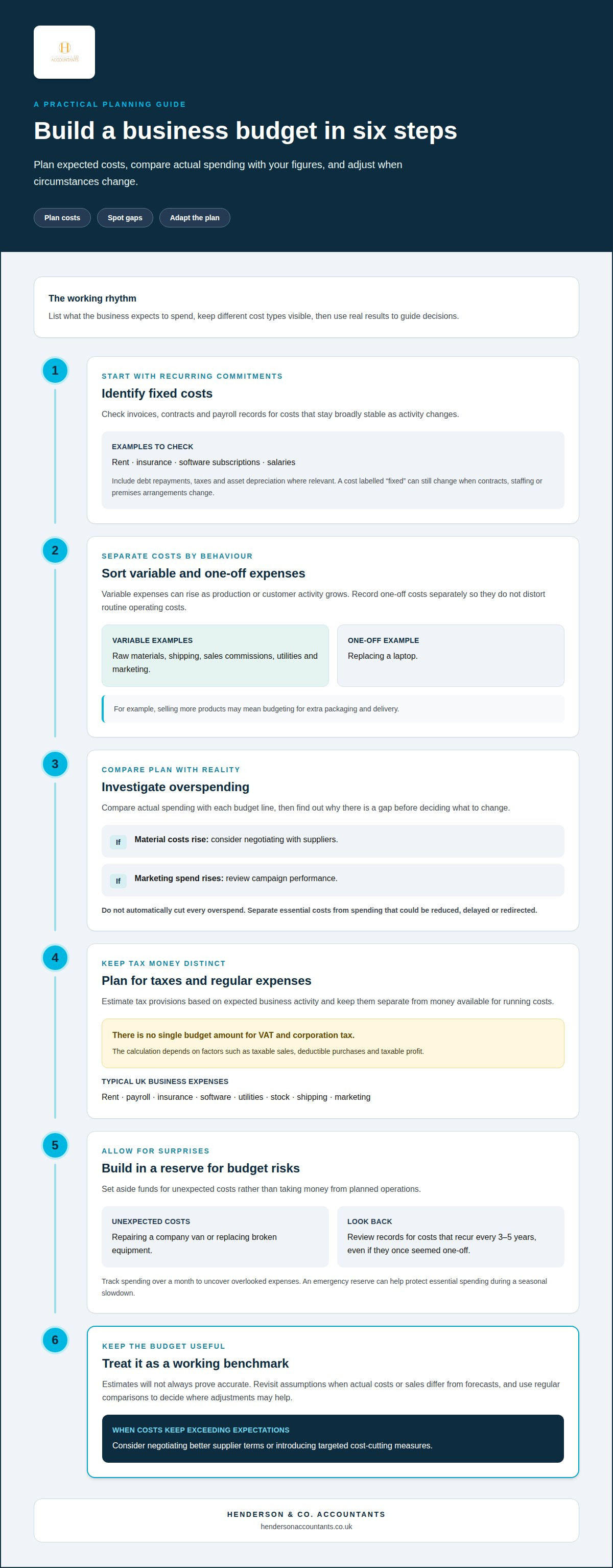
A budget helps owners plan spending against expected income, spot cost pressures and decide where to invest. Use these steps to separate recurring expenses from costs that vary with activity and to plan for unexpected bills.
-
Determine fixed business costs
List recurring commitments first, then check invoices, contracts and payroll records to identify costs that stay broadly stable as activity changes. Rent, insurance, software subscriptions and salaries are common examples. Include debt repayments, taxes and asset depreciation where relevant. Check recent records, because a cost labelled “fixed” can still change when a contract, staffing level or premises arrangement changes.
- Separate fixed costs from variable expenses before setting spending limits. Raw materials, shipping, sales commissions, utilities and marketing can rise as production or customer activity grows. For example, a retailer selling more products may need to budget for extra packaging and delivery. Record one-off costs separately, such as replacing a laptop, so they don’t distort your view of routine operating expenses.
-
Control costs that exceed expectations
Compare actual spending with each budget line, then investigate the reason for any gap. A rise in material costs may call for negotiating with suppliers, while higher marketing spend may warrant a review of campaign performance. Don’t automatically cut every overspend. Distinguish essential costs from spending that can be reduced, delayed or redirected to support business goals.
-
Plan for taxes and typical expenses
Estimate tax provisions based on your business’s expected activity and keep them separate from money available for running costs. There is no single budget amount for VAT and corporation tax: the calculation depends on factors such as taxable sales, deductible purchases and taxable profit. Typical UK business expenses include rent, payroll, insurance, software, utilities, stock, shipping and marketing.
-
Manage unexpected costs and budget risks
Set aside a reserve for surprises, such as repairing a company van or replacing broken equipment, instead of taking funds from planned operations. Review past records for costs that recur every 3-5 years, even if they seemed one-off at the time. Track spending over a month to uncover overlooked expenses, then revisit assumptions when actual costs or sales differ from forecasts.
- Use the budget as a working benchmark, not a promise that every estimate will prove accurate. If costs keep exceeding expectations, negotiate better supplier terms or introduce targeted cost-cutting measures. A separate emergency reserve can help protect essential spending during a seasonal slowdown. Regular comparisons also show where adjustments could help you meet your plans.
Estimating revenue for new businesses
Start with clear sales assumptions, then turn them into a forecast for the coming period. Business budgeting works best when revenue and profit are kept distinct: revenue is income before expenses, while profit is what remains afterwards.
- Build a forecast from business activity. List what you expect to sell, how often customers may buy and which channels you’ll use. For an online shop, estimate orders based on expected website activity and average order value. For a consultancy, map likely projects against delivery capacity. Keep each assumption visible so you can revise it when actual orders arrive.
Separate signed contracts from estimates based on future demand. This shows which income has a firm basis and which depends on new sales. Don’t treat enquiries as completed sales. Include them only when your forecast explains how they could turn into orders, such as through a defined sales process or an upcoming product launch.
- Use relevant evidence for a new business. Without trading history, estimate sales from planned capacity, customer demand and the time needed to build a pipeline. Research typical industry costs to estimate expenses, then consider how they affect the activity you can afford. A retailer’s forecast should reflect stock availability, while a service business should account for the projects its team can deliver.
Keep the first forecast practical. Connect each sales estimate to an activity, such as reaching customers, launching a product or completing a project. If an assumption depends on a marketing campaign, show it separately from sales supported by orders or repeat customers. This makes it easier to see what needs to happen for forecast income to materialise.
- Review historical revenue where records exist. Use at least 12 months of revenue when preparing a budget, and look for seasonal patterns across the period. Compare the same months rather than relying only on an annual average. Note when sales changed after an investment or during a quieter trading period. Past results inform a forecast but don’t guarantee future success.
Check whether changes in prices, products or sales channels make older figures less relevant. As the business gains trading information, replace broad assumptions with evidence from actual orders and customer activity. Business budgeting becomes more useful when estimates reflect how the business sells now, rather than how it originally expected to trade.
- Set a realistic target and track the gap. A business might aim to increase revenue by 5% in the next quarter. Identify the sales activity expected to support that target, then compare actual revenue with the forecast regularly. Investigate whether a gap comes from fewer orders, lower prices or delayed projects before changing the plan.
If sales fall behind, consider a promotion, a price adjustment or targeted marketing. Match the response to the cause: a promotion may help shift slow-moving stock, while targeted marketing may support a service with spare capacity. Update the forecast as conditions change so income assumptions and spending decisions remain in balance.
What’s the Difference Between an Operating, Capital, and Cash Flow Budget?
Small businesses can use operating, capital and cash flow budgets for different planning needs. Incremental budgeting adjusts last year’s figures; zero-based budgeting justifies each expense afresh.
-
Distinguish the three budget types
Separate day-to-day running costs from investment plans and cash timing. An operating budget forecasts income and the expenses of normal activity, such as stock, wages and marketing. A capital budget plans significant investment in assets, such as equipment or premises. A cash flow budget tracks when money enters and leaves the business, showing whether funds will be available when payments fall due.
Keep each view distinct, but connect them. A new piece of equipment belongs in capital planning, while its payment date affects the cash flow forecast. Expected sales and routine costs belong in the operating budget. This separation helps you see whether growth makes commercial sense and whether the business can meet the related cash commitments.
-
Manage cash flow
Map expected receipts and payments by date, not just by month or total value. A sale recorded as income may not bring in cash immediately, while rent or supplier payments can fall due before customers pay. Include payroll, supplier invoices, tax payments and customer receipts in the periods when cash is expected to move.
Use the forecast to identify a likely shortfall early. For a seasonal business, compare quieter periods with expected busy-season receipts and plan how to cover commitments in between. Update estimates as payment dates change. Tracking helps distinguish a temporary blip from a developing trend, so you can respond before pressure affects routine operations.
- Choose a budgeting method that suits your records. Incremental budgeting starts with the previous year’s budget and adjusts it to reflect current expectations. It can be practical when operations remain broadly similar, but may carry forward spending that no longer supports your plans. Zero-based budgeting requires a purpose and justification for every expense, regardless of last year’s figures.
For example, use a zero-based review when a department’s activities have changed or costs need close scrutiny. You don’t have to apply the same method to every decision. Choose an approach that gives useful control without taking more time than the business can reasonably devote to planning.
- Connect budgets to actual performance. Compare cash flow forecasts with bank activity and expected payment dates, then update them when receipts or costs change. Review operating assumptions against actual sales and expenses, and check whether capital purchases still align with business priorities. A written budget makes differences easier to spot and supports timely decisions.
Keep the plan flexible. If a customer payment is delayed, adjust the cash timing rather than treating the original forecast as certain. If a planned investment changes, revise its budget and related cash commitments together. Regular tracking lets owners respond to unexpected shifts while preserving resources for essential activity and growth.
Setting business goals and allocating resources
Turn long-term priorities into practical financial goals, then assign spending to the work that can deliver them. Involve the people responsible for each area so targets connect with day-to-day activity.
-
Set business goals
Write each goal so it is specific, measurable, achievable, relevant and time-bound. For example, “improve customer retention” needs a defined measure, a realistic level of improvement and a review date before it can guide spending. Link the target to a business priority, such as improving repeat sales or preparing to expand. Avoid goals that sound motivating but give owners and teams no way to assess progress.
Break longer-term aims into annual, quarterly or monthly plans. Smaller performance indicators can show whether activity is moving towards the main goal. If expansion is the priority, track practical milestones such as completing a launch plan or preparing a new sales channel, alongside the financial measures used to assess progress.
-
Set spending and sales goals
Set sales and spending targets together, so expected activity has a clear financial plan. A business might aim to increase sales by 20%, then identify the products, customer activity or capacity needed to support that target. Give each team a spending limit linked to its purpose. This makes it easier to see whether proposed costs support the goal or compete with more pressing needs.
Check that targets fit the business’s ability to deliver. A sales goal without enough stock, staff time or marketing support can create pressure without improving profit. Equally, a spending limit set without considering essential work may restrict useful activity. Record the reasoning behind each target so financial management focuses on choices, not figures alone.
-
Allocate resources to business goals
Rank planned work by its contribution to business priorities, then allocate money, staff time and equipment accordingly. For example, reducing low-value spending in one area may release funds for a product launch or customer support. Note the expected benefit beside each allocation. This helps owners compare competing proposals and make informed decisions when resources cannot support every idea.
Involve employees in setting the goals they will help deliver. Give each team clear financial limits and concrete measures, then invite them to identify ways to address a shortfall or increase sales. Employees can often spot practical changes that managers miss. Avoid making budget targets the only measure of success, as that can favour short-term results over innovation and sustainable growth.
- Review progress against the measures and timeframes chosen for each goal. If a target is slipping, discuss whether the plan, resources or assumptions need adjusting before simply cutting spending. A monthly review can connect financial results with team activity and reveal where support is needed. Leave room for forward-looking work so immediate targets don’t crowd out decisions that build future profit and business capability.
Common budgeting challenges and solutions
A budget depends on estimates, so actual results can differ from plan. Use these steps to spot the cause, respond early and keep decisions focused on business priorities.
- Find costs your records have missed. Track spending over a month, including small purchases and irregular invoices. For example, separate software renewals from routine monthly subscriptions so occasional charges don’t disappear into general expenses. Group each item by purpose, then compare the list with your budget. This gives you a clearer starting point for finding overlooked costs and deciding which estimates need updating.
- Test the assumptions behind each forecast. Sales, costs and profitability rely on estimates, so a plan may not match what happens. If marketing activity brings fewer orders than expected, check whether the cause is lower customer response, campaign timing or an unrealistic sales assumption. Update the relevant forecast based on actual results, rather than adjusting unrelated budget lines to hide the difference.
- Compare actual figures with the plan monthly. Regular reviews help identify issues while there is still time to respond. Look at sales, costs and cash movements together: higher revenue may not resolve a cash gap if customers pay later than expected. Record the reason for each important difference and decide whether to revise the forecast, change spending or monitor a temporary variation.
- Build flexibility into the plan. Include a safety net for unexpected costs or a drop in sales, and consider where spending could be reduced during a seasonal slowdown. For example, a business might delay a non-essential purchase or review a marketing campaign if income weakens. Avoid cutting costs without considering the effect on sales, service or work needed to meet existing commitments.
- Make reviews manageable for your team. Preparing and monitoring a budget takes time from managers and employees, so focus meetings on key differences and decisions. Assign responsibility for important figures, such as sales forecasts or supplier spending, and keep the process proportionate to the business. If a recurring shortfall appears, agree on a clear action and review its effect at the next monthly meeting.
- Revise the plan when circumstances change. A budget is a guide, not a promise that estimates will prove accurate. Update it when actual trading, costs or seasonal conditions shift, and explain changes to the people responsible for spending. For support making financial information easier to use, explore practical budgeting support.
Henderson & Co. Accountants
Henderson & Co. Accountants can help turn financial records into clearer information for business planning. If your forecasts feel disconnected from actual performance, an outsourced finance director or outsourced finance department can support financial oversight and decision-making. For eCommerce businesses, eCommerce Accounting can help organise financial information around trading activity, while Xero Cloud Accounting Setup supports a cloud-based accounting system. VAT Return Preparation and Corporation Tax Returns can also help manage these reporting tasks.
Consider this support when growth, changing costs or limited time make it harder to maintain a useful view of your finances. Contact Henderson & Co. Accountants to discuss support for your business.
Make your next financial decision with clarity
A budget becomes more useful when it shapes decisions, not just records them. As your business changes, let business budgeting guide which opportunities deserve attention and which assumptions need another look. This approach can help you make deliberate choices without losing sight of your longer-term direction.
Henderson & Co. Accountants can support the financial information behind those decisions. Its eCommerce Accounting, Xero Cloud Accounting Setup and VAT Return Preparation can help businesses keep relevant records and reporting organised. Clearer financial information gives you a stronger basis for planning and reviewing the next stage of growth.
If you’d like support making your financial processes work more clearly for your business, contact Henderson & Co. Accountants. A considered next step can help you move forwards with greater confidence.
Henderson & Co. Accountants and business budgeting
Henderson & Co. Accountants supports businesses with the financial records and reporting that inform a budget. Its services include bookkeeping, Annual Accounts, VAT Return Preparation, Corporation Tax Returns and Payroll and CIS Management.
When you need help putting financial processes in place or managing them as your business plans and reviews its budget, Henderson & Co. Accountants also offers Xero Cloud Accounting Setup, eCommerce Accounting, an Outsourced Finance Department and an Outsourced Finance Director.
Frequently Asked Questions
How Can Budgeting Software Improve My Financial Planning?
Budgeting software can automate data collection, provide analytics and bring financial information together. This can reduce manual copying between records and make changes easier to spot. For example, reviewing a sales forecast alongside spending may reveal pressure sooner than reading separate reports. Choose tools that suit your existing records and the decisions you need to make; extra features are useful only if they help you act on reliable information.
How Often Should I Review and Adjust My Budget?
Review your budget monthly, then update it when a material change affects your assumptions. A new sales channel, delayed customer payment or supplier price change can alter the plan before the next routine review. Keep a brief record of what changed and why. This creates a useful trail for later decisions and helps distinguish a one-off variation from a pattern that may need a different response.
What are the key components of a budget?
A useful budget brings expected revenue, fixed and variable expenses, one-off spending, cash movements and projected profit into one planning view. Assign a clear owner and purpose to each major line. For example, identify whether a marketing allocation supports customer acquisition or retention, then decide how you’ll assess its contribution. This makes the figures easier to interpret and helps teams connect spending choices with business priorities.
Where To Start?
Start with the decision you need the budget to support, such as hiring, entering a sales channel or managing a quieter trading period. Gather the records relevant to that decision, including invoices, payroll information and sales reports. Then choose a planning period and assign responsibility for the assumptions. A focused first budget is easier to maintain than a detailed plan covering activity you don’t yet need to assess.
What is a business budget and what does it include?
A business budget is a financial plan that estimates income and outgoings for a chosen period. It can include sales expectations, regular operating expenses, costs that vary with activity, planned purchases and anticipated cash movements. A budget also gives owners a reference point for reviewing results. For example, comparing planned and actual spending can show whether a new project is using resources as intended.
How do you create a business budget step by step?
First, decide what the budget must help you plan. Gather relevant financial records, list expected income and expenses, and document the assumptions behind each estimate. Separate routine activity from planned investments, then map when receipts and payments are expected. Assign responsibility for key figures and set a review point. As actual results come in, record differences and update assumptions that no longer match trading conditions.
How do UK businesses forecast revenue and cash flow?
Businesses forecast revenue by estimating expected sales based on orders, customer demand, capacity and available historical records. They then map when those sales are likely to produce cash, since an invoice and its payment can fall in different periods. Include expected receipts and payments by date, such as customer collections and supplier invoices. This helps reveal timing gaps that a sales forecast alone might not show.
What free or paid business budgeting software is available in the UK?
UK businesses can use spreadsheets, budgeting features within cloud accounting platforms or dedicated budgeting software. Free and paid options vary in functionality, data handling and reporting, so match the tool to your needs rather than choosing on price alone. Look for a practical way to gather figures, compare forecasts with actual results and view financial information together. Henderson & Co. Accountants offers Xero Cloud Accounting Setup.