
How to Improve Business Cash Flow: A Guide for UK SMEs

A profitable business can still run short of cash. To improve business cash flow, track when money is expected to come in and go out, then act early if a shortfall appears. Cash flow is about timing: sales only become cash when customers pay, while bills and other costs still need to be met.
That’s why a healthy profit figure doesn’t always mean there’s enough cash to pay suppliers, staff or other expenses. A clear cash-flow forecast, updated weekly or monthly, can help you spot pressure early and make informed decisions before it becomes critical.
This guide explains what cash flow means and how it differs from profit. You’ll learn practical ways to manage payment timing, encourage earlier customer payments with discounts when they make financial sense, and keep your forecast useful. Together, these steps give you a clearer view of the cash available to run your business and plan ahead.
Key Takeaways
- Track cash moving in and out of your business, not just sales or profit, to understand what’s available to meet bills and fund plans.
- Use a cash-flow forecast and update it regularly so you can spot likely shortfalls early and prepare for quieter periods.
- Review when customer payments arrive, when supplier bills fall due and how much cash is tied up in stock.
- Consider whether leasing equipment or property could preserve cash that would otherwise be spent on a purchase.
- Assess early-payment discounts against the cash they bring in sooner, and the margin you give up to offer them.
1. What Is Cash Flow?
Cash flow is the money moving into and out of your business. For a UK small business seeking quick improvements, invoice promptly, review non-essential spending and negotiate supplier costs. Leasing equipment instead of buying it can also preserve capital for bills and daily operations.
Cash inflows include customer payments for goods or services and income from investments. Outflows include operating expenses, supplier bills and debt repayments. For example, a furniture maker receives cash when customers pay for tables, then pays for timber, wages and workshop costs. The timing of each payment matters as much as the amount.
Positive cash flow means more money comes in than goes out during the period being considered. It helps a business meet obligations, pay employees and suppliers, reduce debt and respond to unexpected costs. Poor cash-flow management can leave a business unable to pay its bills, even if it has orders or valuable assets. Aim to hold enough cash to cover all costs for at least one month, and ideally longer.
Leasing equipment or property can spread payments over time rather than tying up capital in a purchase. A new delivery van, for example, may be essential for a growing business, but buying it outright can leave less cash for stock or wages. Leasing may suit assets needed for a defined period; compare the full financial commitment with the value and length of use. A lease doesn’t remove the cost, but it changes when cash leaves the business.
Refinancing existing borrowing may change repayment timing, while selling an under-used asset can turn it into cash. A company with an idle second vehicle, for instance, could sell it rather than keep paying its running costs. Another option is to sell an asset and lease it back, receiving the sale proceeds while continuing to use it. Consider future lease payments and the asset’s role before deciding.
Short-term borrowing can bridge a temporary gap between paying costs and receiving customer payments, but repayments create future outflows. Equipment leasing can avoid a large initial purchase, although the ongoing commitment still needs to fit the forecast. A useful cash-flow review should include receivables, stock, supplier payments, capital spending and finance repayments. That wider picture helps distinguish a timing problem from a business model that consistently spends more than it brings in.
2. Cash flow forecasting
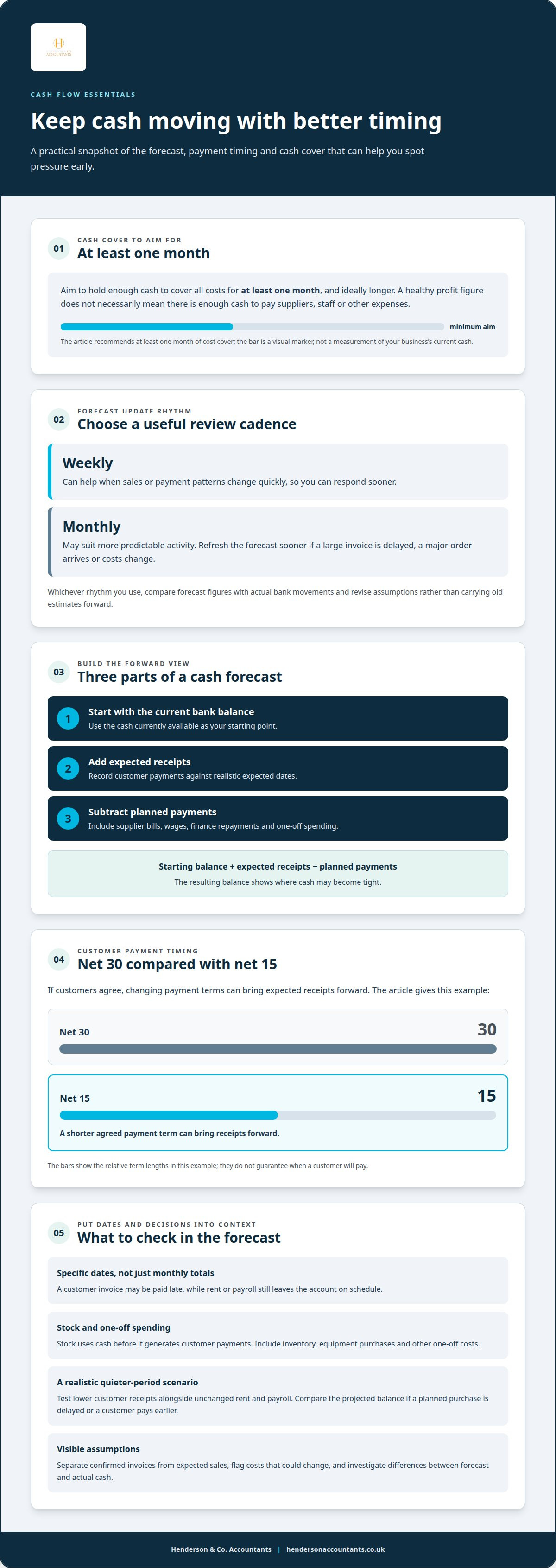
A cash-flow forecast estimates when money will enter and leave your business. It turns expected sales, invoices, supplier bills, wages and finance repayments into a forward view of available cash. Start with the current bank balance, then add expected receipts and subtract planned payments. The resulting balance shows where cash may become tight, even if projected sales look healthy.
Build the forecast around specific dates, not just monthly totals. An invoice due near the end of a month may be paid late, while rent or payroll still leaves the account on schedule. Record customer payments using realistic expected dates, alongside regular costs and less frequent bills. Include planned equipment purchases and other one-off spending, as these can sharply change the balance.
Update the forecast weekly or monthly, depending on how quickly your business changes. Weekly updates can help a business with shifting sales or payment patterns respond sooner. A monthly review may suit more predictable activity, but refresh the forecast if a large invoice is delayed, a major order arrives or costs change. Compare forecast figures with actual bank movements, then revise assumptions instead of carrying old estimates forward.
Use the forecast to test decisions before committing cash. For example, model a quiet trading period with lower customer receipts but unchanged rent and payroll. Then compare it with a scenario where a planned purchase is delayed or a customer pays earlier. These comparisons show which action has the clearest effect on the projected balance. They also help you spot a likely shortfall early enough to discuss payment timing or spending priorities.
Give inventory its own place in the forecast. Stock purchases use cash before the goods generate customer payments, so increasing inventory can tighten working capital. Estimate when each order will be paid for, when the stock is expected to sell and when customers are likely to pay. If a product sells slowly, reduce future orders in the forecast; if demand rises, model the extra stock cost alongside expected sales receipts.
Keep assumptions visible. Separate confirmed invoices from expected sales, and flag costs that could change, such as supplier orders or delivery charges. A cloud accounting system can help bring invoices and bank transactions together, while a spreadsheet can work if you update it consistently. The best choice is the one that lets you compare forecast and actual cash without missing key dates.
For a clearer view of transactions and forecasts, Xero cloud accounting setup can support organised cash-flow tracking. Use the forecast as a working tool: update it regularly, investigate differences and adjust planned spending when the numbers point to pressure.
3. Managing receivables, stock and supplier payment timing
Speed up customer receipts by sending each invoice as soon as work is complete or goods are delivered. State payment terms clearly, then follow up promptly when an invoice becomes overdue. For example, changing terms from net 30 to net 15 can bring expected receipts forward, if customers agree. Deposits or staged invoices can also spread receipts across a long contract instead of leaving all payment until completion.
Keep stock aligned with demand. A retailer forecasting seasonal sales can order closer to expected need, rather than tying cash up in products that may sit unsold. Identify slow-moving items and pause repeat purchases until existing stock sells. For made-to-order work, buying materials after receiving a confirmed order may reduce cash tied up in inventory, provided delivery commitments remain realistic.
Supplier timing matters too. Discuss terms before a cash squeeze and agree dates that preserve working capital without damaging the relationship. Some businesses negotiate net 60 or net 90 terms; use any extension to align payments with customer receipts, not as a reason to miss agreed dates. Electronic payments can help control timing by scheduling a bill for the morning it is due, rather than paying far in advance.
Include VAT, PAYE and Corporation Tax payments in your forecast as planned cash outflows. Their deadlines can coincide with payroll, supplier bills or quieter trading periods, leaving less cash for everyday expenses. Set aside the money as liabilities build, rather than treating it as available working capital.
Employment costs also affect cash timing. Before hiring, account for pay, leave and other entitlements, then match staff rosters to busy periods where practical. A business with a short-term specialist project could outsource the task rather than add a permanent role. For commission-based staff, paying commission after the customer pays can align the expense with the receipt.
During periods of change, communicate early with customers, suppliers, lenders or investors. A growing business moving to larger premises, for example, may face fit-out costs before increased sales arrive. Discuss revised dates or staged payments before commitments fall due. Training staff in cash management helps them spot risks too: teach sales teams to issue accurate invoices, purchasing staff to avoid excess stock, and managers to flag unusual expenses. A profitable sale can still create pressure if its costs leave the bank before the customer pays.
4. Offering discounts for early customer payments
Set clear payment terms before work begins, then invoice promptly and follow up on overdue accounts. Net 15 instead of net 30 can encourage earlier payment; regular credit control helps you identify late payers and act before debts become harder to collect.
An early-payment discount can bring cash into the business sooner, but it reduces the amount you receive. Compare the discount with the value of having the money earlier, and check that the remaining sale margin still covers costs. For example, a business short of cash before supplier bills fall due may value faster payment more than one with a comfortable balance. Test the approach with selected customers before making it standard practice.
Agree the offer in writing, including the payment date required to qualify and how the discount will appear on the invoice. Keep the calculation simple and make sure the customer can see the amount due. Review whether payments arrive earlier after introducing the offer. If customers claim the discount but still pay late, it may reduce income without improving cash timing.
Credit control starts before an invoice becomes overdue. Set clear terms when accepting an order, review the customer’s payment history and agree who will handle reminders. Keep a record of invoice dates, due dates, part-payments and disputes. A prompt, polite reminder can resolve a missed invoice; a disputed charge may need a separate conversation before payment can proceed.
Use payment data to judge whether the process is healthy. Track how long customers take to pay, the value of overdue invoices and which accounts repeatedly miss terms. Compare results over time and review whether a change, such as net 15 terms or an early-payment discount, brings cash in sooner. Look at the figures by customer and invoice type, since a single large late payment can distort an overall average.
Supplier terms matter alongside customer receipts. A business can negotiate net 60 or net 90 payment terms to retain cash for longer, but should weigh the benefit against supplier relationships and reliability. Share expected payment dates early if trading conditions change, and agree revised terms before an invoice falls due. Regular communication can support more workable arrangements than last-minute requests.
Compare the timing of customer receipts with supplier payments and other planned outflows. If customers pay after a key supplier bill falls due, a discount may help close the gap, while negotiated supplier terms may offer another option. Choose an approach that supports cash flow without giving away unnecessary margin or damaging a healthy trading relationship.
5. Cash flow compared with profit
Profit and cash flow answer different questions. Profit measures what remains after expenses are deducted from income; cash flow tracks money actually moving into and out of the business. A profitable result can therefore sit alongside a strained cash position if receipts arrive after bills fall due.
Consider a business that completes a large customer order and invoices immediately. The sale may contribute to reported revenue, but the business can’t use that money until the customer pays. Meanwhile, wages, supplier costs or finance repayments may leave the bank account. The profit figure records performance; the cash balance shows what the business can pay now.
Look at the source of cash as well as the total. Cash from operating activities reflects the core business, such as customer receipts and payments for day-to-day costs. Investing activities include buying or selling assets. Financing activities include borrowing, repaying debt and issuing or repurchasing shares. These categories help explain whether cash comes from trading or another activity.
Growth can make the difference especially clear. A retailer may report rising sales while spending cash on additional stock before those goods are sold. A business investing in equipment may also have less available cash, even if its underlying operations remain profitable. Borrowing can increase cash temporarily, but repayments and interest create future outflows. Read profit alongside these movements rather than treating either figure as the full picture.
Use both measures when making decisions. Start with the profit and loss account to understand income and expenses, then review cash movements and expected payment dates. Ask whether reported profit has turned into collected customer payments, and whether upcoming bills could absorb the available balance. If you plan to invest in equipment or expand operations, model the purchase and its expected cash effect before committing.
A healthy cash position also gives you choices. It can help you meet obligations, reduce debt or fund an opportunity without relying immediately on borrowing. Spare cash may be set aside for emergencies or future investment; an interest-paying account may also earn interest. Keep that reserve separate from money needed for upcoming costs, so a positive profit result doesn’t disguise cash already committed elsewhere.
If company administration is taking time away from reviewing business performance, explore company secretarial support as part of keeping essential responsibilities organised.
Henderson & Co. Accountants
Henderson & Co. Accountants can help you bring financial records, tax responsibilities and cash-flow decisions into clearer view. If your business needs a more reliable picture of transactions and expected payments, Xero Cloud Accounting Setup can help organise your accounting records. For online sellers, eCommerce Accounting can help make sense of business activity across the sales process.
VAT Return Preparation and Corporation Tax Returns can help you manage key reporting tasks alongside wider financial planning. This support can be useful when delayed customer receipts, upcoming tax payments or changing sales patterns make cash harder to manage. Clear records help you understand what has been paid, what remains due and how trading activity affects available cash.
For support with your business accounts and cash-flow picture, contact Henderson & Co. Accountants.
Put your cash-flow insight into practice
Make your cash-flow picture a regular part of business decision-making, not just a report you review when pressure builds. Choose a rhythm for reviewing expected receipts and payments, then use what you learn to guide spending, stock purchases and growth plans. That makes how to improve business cash flow an ongoing part of running your business, rather than a one-off exercise.
If accurate records or reporting tasks are making that harder, Henderson & Co. Accountants can support you with eCommerce Accounting, Xero Cloud Accounting Setup and VAT Return Preparation. Organised financial information can help you understand what is due, what has arrived and where to focus next.
For support that fits your business, contact Henderson & Co. Accountants. A clearer view of your finances can help you make your next decision with greater confidence.
Frequently Asked Questions
What Is Cash Flow?
Cash flow is the movement of money into and out of a business over time. For example, a consultancy might record income from completed work, but its usable cash depends on when clients pay and when rent, wages and software bills leave the account. A bank balance shows the cash available now; a cash-flow record helps explain how that balance changed and what future transactions may affect it.
How can UK businesses create and use a cash flow forecast?
Start with the current bank balance, then list expected receipts and payments by date. Use confirmed orders and invoices where possible, and separate them from estimates such as potential sales. For a practical test, model a customer paying late while a planned equipment purchase still goes ahead. Compare the result with a version that delays the purchase, then use the difference to guide spending or payment discussions.
How can a business reduce late payments and recover overdue invoices in the UK?
Set clear payment expectations before accepting work, issue accurate invoices promptly and keep a record of due dates. If an invoice is overdue, check whether the customer received it and whether there is a dispute. Follow up with a clear payment request and an agreed date. If the customer can’t pay in full, a written instalment plan may be more practical than leaving the debt unaddressed.
How can businesses manage stock and supplier payment terms to free up cash?
Use sales patterns and outstanding orders to decide which stock needs replenishing, rather than reordering automatically. A business selling several product lines could prioritise reliable sellers and pause purchases of items that remain unsold. Review supplier terms alongside expected customer receipts, then discuss changes before payment falls due. This helps avoid paying early unnecessarily while maintaining clear communication and meeting agreed commitments.
How can a UK business reduce operating costs without harming growth?
Separate essential spending from costs you can reduce without affecting delivery or customer experience. Review recurring subscriptions, duplicated software, unused storage and supplier agreements. For example, cancelling an unused service may release cash without reducing production capacity. Before cutting marketing, staffing or product development, consider how each cost contributes to future sales, service quality or efficiency. Track the effect of each change against business performance.
What UK financing options can help with cash flow, and what do they cost?
Options include a business loan, an overdraft, invoice finance or a grant, depending on the purpose and circumstances. Borrowing costs can include interest and fees; the total depends on the amount, repayment period, terms and the business’s financial position. Compare the expected cash received with repayments and charges across the full term. A grant may have eligibility conditions and a defined purpose, so it may not suit every cash need.
What are the risks and costs of invoice finance, overdrafts and business loans?
Invoice finance can bring cash forward, but the provider’s fee reduces the amount ultimately received. Some arrangements pay 90% of an invoice’s value upfront, then the remaining 10% less the fee after the customer settles. An overdraft can carry interest and charges, while a loan creates scheduled repayments and interest costs. Each option can add pressure if customer receipts fall or arrive later than expected.
How can a business improve cash flow while managing seasonal demand and growth?
Use previous trading patterns to map quieter periods, busy months and the costs needed ahead of peak demand. A seasonal retailer could plan stock purchases around expected sales and avoid committing to expansion costs before receipts support them. For rapid growth, model the cash needed for extra stock, staff or premises alongside expected customer payments. Staging investment can help align spending more closely with incoming cash.