
VAT Certificate: How to Find and Check It in 2026

What if the VAT number on an invoice doesn’t match the details HMRC holds for your business? Your vat certificate can help you compare them. It records key VAT registration details, including your VAT number, business name and address, and registration date. The certificate isn’t the VAT number itself: it’s the document that brings registration information together.
If you’re unsure where to find it or what to compare, start with your HMRC online account. Checking the registration details against your invoices, accounting software and sales platforms can help you spot inconsistencies before they create extra admin.
This guide explains what a UK VAT certificate confirms, where to find and check its details, and what to do if information needs updating. It also covers ways to organise VAT records when sales across several online channels make transactions harder to match. Accurate bookkeeping supports VAT return preparation by keeping the records you need together and easier to review.
Key Takeaways
- Understand how a vat certificate differs from the VAT registration number recorded on it.
- Learn where to look in your HMRC online account for your VAT registration details.
- Use your registration information as a reference when checking invoices and sales records.
- Know how to investigate a discrepancy and distinguish incorrect details from a later business change.
- Build a simple routine for keeping VAT information organised as your business and sales channels grow.
What is a VAT certificate, and what does it prove?
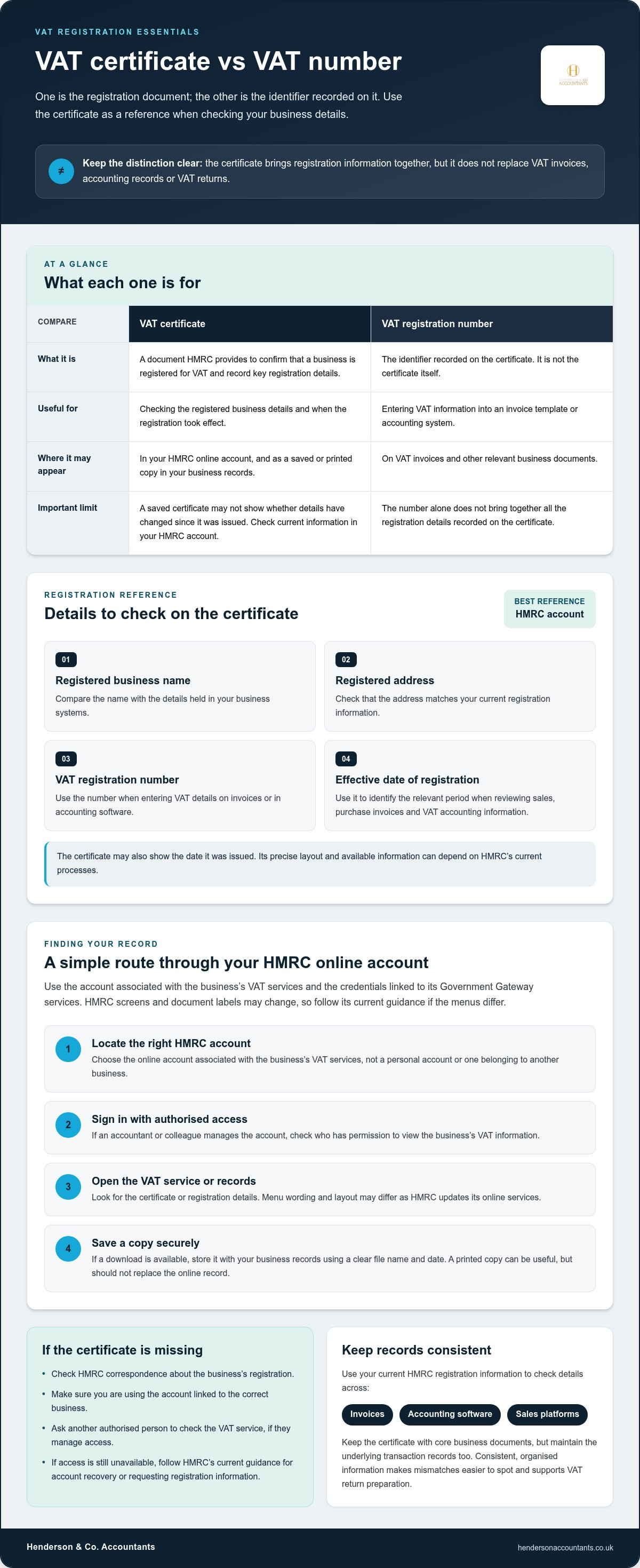
A UK VAT registration certificate is a document HMRC provides to confirm that a business is registered for VAT and record key details of that registration. It gives you a reference for identifying the business and checking when its registration took effect. It doesn’t replace VAT invoices, accounting records or returns, which each serve a different purpose.
A VAT certificate records a business’s VAT registration details, but it doesn’t replace the records the business must keep. Use it as a reference when checking whether registration information is consistent across your bookkeeping and business systems.
What information may appear on a VAT registration certificate?
HMRC’s certificate typically shows the registered business name and address, VAT registration number, effective date of registration and date the certificate was issued. The precise layout and information available may depend on HMRC’s current processes. Use your certificate and HMRC online account as the reference for your registration rather than relying on a general list of fields.
The effective date is particularly useful when organising records. It identifies when the registration applies, helping you review the relevant period when matching sales, purchase invoices and VAT accounting information. If your bookkeeping system and sales platform show different details or dates, compare them with the registration information before preparing or reviewing records.
Keep the certificate with your core business documents and record the details in your accounting records where relevant. This makes mismatches easier to spot, especially if your business uses more than one sales channel. The certificate provides a reference point, but you still need to maintain records of the underlying transactions and VAT activity.
Is a VAT certificate the same as a VAT number?
No. The certificate is the document; the VAT number is the identifier recorded on it. A VAT registration number may also appear on VAT invoices and other relevant business documents. For a general explanation of the identifier, see this overview of the VAT identification number.
That distinction matters in day-to-day administration. Refer to the certificate to check registration details, but use the number when entering VAT information into an invoice template or accounting system. Check that the number and associated business details match the current information in your HMRC account. A saved certificate is useful, but it doesn’t on its own show whether details have changed since it was issued.
If you use accounting software alongside an online shop or other sales channels, compare the registration details in each system with your HMRC information. Consistent records make it easier to prepare VAT returns and investigate a discrepancy without confusing the certificate with the number itself.
How to find your VAT certificate and registration details
Your VAT registration certificate is usually available through your business’s HMRC online account, accessed using the credentials linked to its Government Gateway services. Screens and document labels can change, so use HMRC’s current online guidance if the menus differ from the steps below. The aim is to find the registration record and save a copy for your files.
- Locate the right HMRC account. Use the online account associated with the business’s VAT services, not a personal account or one belonging to another business.
- Sign in with authorised access. If an accountant or colleague manages the account, check who has permission to view the business’s VAT information.
- Open the VAT service or records. Look for the certificate or registration details. The wording and layout may differ as HMRC updates its online services.
- Save the document securely. If HMRC provides a downloadable copy, store it with your business records using a clear file name and date. A printed copy can be useful for reference, but shouldn’t replace the online record.
Where should a business look for its VAT certificate?
Start with HMRC’s online services and follow the current route for VAT registration information. The account record is the information available through HMRC; a saved or printed certificate is a separate copy for your files. If you download a copy, store it securely somewhere relevant people in the business can access. Don’t rely on an old paper copy as your only reference when checking current details.
The interface may not use the same labels as older guides. Follow HMRC’s current instructions rather than searching for a particular menu name that may have changed. This can help you distinguish the registration document from a VAT return service or a general account message.
What if the certificate is missing or inaccessible?
First, check HMRC correspondence about the business’s registration and make sure you’re using the account linked to the correct business. If another authorised person manages access, ask them to check the VAT service. A login problem or a certificate that isn’t visible doesn’t, by itself, show that VAT registration has ended.
If you still can’t access the record, follow HMRC’s current guidance for recovering account access or requesting registration information. Avoid relying on old instructions or assumed processing times, as access and document-request processes can change. Note what you’ve checked and keep any HMRC correspondence, so you can pick up the issue without repeating steps.
Once you’ve found the record, save it alongside the bookkeeping information used to prepare your VAT returns. For online sales across several channels, well-organised bookkeeping helps keep relevant information together.
How to use VAT certificate details across invoices and business records
Use your registration details as a reference when reviewing the places where your business records VAT information. Compare the registered business name and VAT number on the certificate with details in your accounting software, invoice templates and sales platforms. The aim is consistency, not simply copying information into one system and assuming every other record is correct.
Accurate source details give your business a clear reference point for consistent VAT administration. This makes routine checks and VAT return preparation more straightforward, especially when information is entered or updated in several places.
Which VAT details should you keep consistent?
Compare the relevant registration information with details used in your accounting records and customer-facing systems. A different business name or VAT number on an invoice template, for example, may be a simple data-entry issue, but it needs attention. Check the source information before changing records, and use current HMRC guidance to confirm what details an invoice should include and how they should be presented.
Imagine a small online retailer that updates its accounting software after a business detail changes but leaves the old details saved in a marketplace account. Sales may still appear in reports, while the business information attached to those sales differs between systems. Comparing the records helps locate the mismatch and identify which information needs reviewing. It doesn’t, by itself, determine the correct treatment of a transaction.
How can online sellers organise VAT information?
Build a repeatable check into your bookkeeping routine. Keep a current copy of your registration information with your business records, review the details held in each sales channel and payment platform, then compare the resulting sales data with your accounting software. Reconcile the sources rather than relying on a single dashboard: marketplace reports, payment summaries and bookkeeping records may each show a different part of a transaction.
- Keep a record of the VAT details used by each marketplace or sales platform.
- Review invoice and accounting-system settings when business information changes.
- Compare sales and payment reports with the accounting entries used for VAT reporting.
- Note discrepancies and investigate them before relying on the figures for a return.
This joined-up approach becomes more useful as your eCommerce activity grows. Adding sales channels can mean more reports, settings and transaction data to keep aligned. The eCommerce accounting guide explains the wider record-keeping picture for online sellers. The eCommerce bookkeeping guide also offers practical context for organising and reconciling business records.
What to Do if VAT Certificate Details Change or Are Wrong
A difference between your VAT certificate and business records can be unsettling, but check the facts before changing anything. First establish whether the certificate was incorrect when issued or whether your business details changed later. These situations may require different actions, so don’t assume every discrepancy follows the same HMRC process.
Use an evidence-led approach:
- Identify the mismatch. Note which detail differs, such as the business name, address or registration information.
- Compare your records. Check the certificate against original registration correspondence and the information in your HMRC online account.
- Gather relevant evidence. Keep copies of documents and correspondence that help explain the discrepancy.
- Follow current HMRC guidance. Use the instructions for the specific error or change, and keep a record of any action taken.
How should you handle an apparent error?
If a detail appears to have been wrong from the start, compare it with the original registration information and current HMRC account record. A typing error in your bookkeeping may need a different response from incorrect information on HMRC’s record. Check HMRC’s current instructions for reporting the specific issue rather than using a process intended for another type of correction.
Keep the original certificate and any related messages or documents. Avoid overwriting the only copy or changing several systems before you know which information is accurate. If the mismatch also appears in invoices or accounting records, note where it occurs so you can review those records consistently once the correct details are established.
What if the business details have changed?
A later change, such as a new business address or name, differs from an error that was present on the certificate from the outset. Check HMRC’s current requirements for that change, including how to report it and any applicable deadline. HMRC guidance says certain business-detail changes, including name or address changes, must be reported within 30 days. Confirm the current instructions for your circumstances before acting.
Once the correct registration details are established, update relevant records, such as accounting software, invoice settings and sales-channel accounts. Keep confirmation of the changes alongside the updated information. This creates a clear trail for future bookkeeping and VAT return preparation, particularly if different systems used different details during the transition.
Accurate bookkeeping helps carry confirmed VAT information through to your records and returns. Henderson & Co. Accountants provides VAT return preparation to help businesses organise records for return preparation. Read more about VAT return preparation support.
Keep VAT certificate information organised as your business grows
A simple routine keeps registration information connected to the records you use for day-to-day VAT administration. Save the latest VAT certificate with relevant HMRC correspondence, make sure the people responsible for bookkeeping know where to find it, and review the details whenever your business information or accounting systems change.
This matters more as an online business adds sales channels. A marketplace, payment provider and accounting system may each hold separate business details or produce different reports. If you don’t review those sources together, it can take longer to trace a difference when preparing records for a VAT return. A consistent process helps your team identify which information is current and where each figure comes from.
A straightforward VAT record-keeping routine
Keep the routine practical and repeatable. Store the latest certificate and related HMRC correspondence securely, using a clear file name to identify the current version. When registration details change or you update software, check the relevant settings and records rather than assuming the change has carried across automatically.
- Keep the current certificate and relevant HMRC messages together in a secure, accessible location.
- Review registration details in accounting software, invoice settings and sales platforms after a confirmed change.
- Reconcile sales and payment information with your bookkeeping records regularly.
- Record updates and unresolved differences so they can be followed up.
The certificate is a reference for registration details, while bookkeeping records capture the underlying business activity. Keeping both organised supports a clearer path from sales and purchase information to VAT return preparation. It also helps you spot missing or inconsistent data while it is easier to investigate.
When can an accountant help with VAT administration?
As transaction volumes and sales channels increase, keeping VAT information aligned can demand more attention. An accountant can support organised bookkeeping and VAT return preparation, helping bring records together and review how information flows into reporting. For an eCommerce business, that can involve data from multiple marketplaces, payment channels and accounting software, rather than relying on a single platform summary.
Good support complements your records. It doesn’t issue or replace an HMRC certificate, and it doesn’t remove the need to keep business information and transaction records accessible. It can help you maintain a dependable process as your operations develop.
Henderson & Co. provides eCommerce accounting, bookkeeping and VAT return preparation, helping businesses organise financial information across their operations.
Build a VAT process that can grow with your business
Your VAT process should keep working as your business evolves. Treat the vat certificate as one part of a wider routine: decide who maintains key information, where records are kept and how updates are shared across your systems. That small step can help prevent routine administration from becoming harder to manage as your team, sales channels or software change.
Reliable bookkeeping and well-organised records also provide a stronger starting point for VAT return preparation. Henderson & Co. supports businesses with VAT return preparation, specialist eCommerce accounting and Xero cloud accounting setup, helping connect financial information across the business.
Explore Henderson & Co.’s VAT and accounting support to keep your records structured and your accounting processes ready for what comes next.
Frequently Asked Questions
What is a VAT certificate?
A VAT certificate is a document linked to a business’s VAT registration, rather than the VAT number itself. It helps you identify registration details, but its format and information may change as HMRC updates its services. If you need to rely on a particular detail, compare the certificate with the current information in your HMRC account. This distinguishes a useful reference copy from the latest registration record.
How do I get a copy of my VAT certificate?
Check the business’s HMRC online services and the correspondence received around registration. Make sure you’re using access associated with the correct business, particularly if you manage more than one company. The route to view or save a copy can change, so follow current HMRC instructions rather than an old guide. If you can’t sign in, use HMRC’s current account recovery or contact route, then store any copy you obtain with the business’s VAT records.
How long does it take to receive a VAT certificate?
There isn’t a fixed timeframe to rely on without checking current HMRC guidance for your registration. Processing can depend on the circumstances, so look for updates in the business’s HMRC account and registration correspondence. If you need to confirm a detail for an invoice or accounting task, check what HMRC currently shows. A certificate that hasn’t appeared yet doesn’t, by itself, confirm that registration has been refused or ended.
Can I use my VAT number before receiving the certificate?
Whether you can use VAT details for a particular business activity depends on your registration status and the effective date HMRC has recorded, not simply whether you’ve received a certificate. Check the official registration information and current HMRC rules before issuing VAT documents or applying VAT treatment to transactions. If the information you hold conflicts with HMRC’s record, clarify the position using current guidance rather than guessing.
What happens if my VAT certificate has the wrong business details?
First establish exactly what differs, then compare the certificate with your registration correspondence and HMRC account. A detail entered incorrectly at registration may need a different route from a later change of name or address. Follow the current HMRC instructions for the specific issue and keep copies of relevant messages or evidence. Once the correct information is clear, update connected records so the discrepancy doesn’t carry into future bookkeeping or reporting.
Is a VAT certificate proof that a business is currently VAT registered?
A VAT certificate is useful evidence of registration details, but an old saved copy may not reflect later updates or HMRC’s current position. If you need to confirm status for a transaction or business check, review the latest information in the relevant HMRC account. Make sure the record relates to the correct business and registration. Treat the certificate as a reference, not a substitute for checking current details when they matter.
Do online sellers need to keep their VAT certificate?
Keeping an accessible copy with business VAT records makes registration information easier to refer to, especially when several people manage sales and accounts. Online sellers should also keep transaction records from marketplaces, payment providers and accounting software, since the certificate doesn’t document individual sales or purchases. Organising these sources together can help with reconciliation and VAT reporting. Check current HMRC record-keeping guidance to understand what applies to your business.