
Why UK Businesses Need Management Accounts

Annual accounts can show what happened, but management accounts help you respond while the year is still underway. The reason why businesses need management accounts is that regular reports, usually prepared monthly or quarterly, help you understand profitability, plan budgets and cash flow, and compare results with business targets.
Year-end accounts are important, but they don’t provide the same regular view of performance or help you spot changes as they happen. Most small UK businesses aren’t legally required to prepare management accounts, yet regular reporting can bring clarity to everyday decisions.
Management accounts can help you assess profit, plan for different financial scenarios and track progress against targets. Regular reporting also makes cash-flow patterns easier to understand, giving you a clearer basis for decisions about what’s happening in your business.
Key Takeaways
- Use regular management reports to see how your business is performing between year ends and make decisions with fresher information.
- Break down income and costs by service line or department to identify where margins are strong and where performance may need attention.
- Compare budgets with actual results and update forecasts to understand the impact of planned decisions.
- Track cash-flow patterns alongside profit, so you can plan for seasonal changes and prepare for upcoming payments.
- Payroll and CIS Management can support businesses that need help managing payroll and CIS as part of their financial operations.
What are Management Accounts and why do I need them?
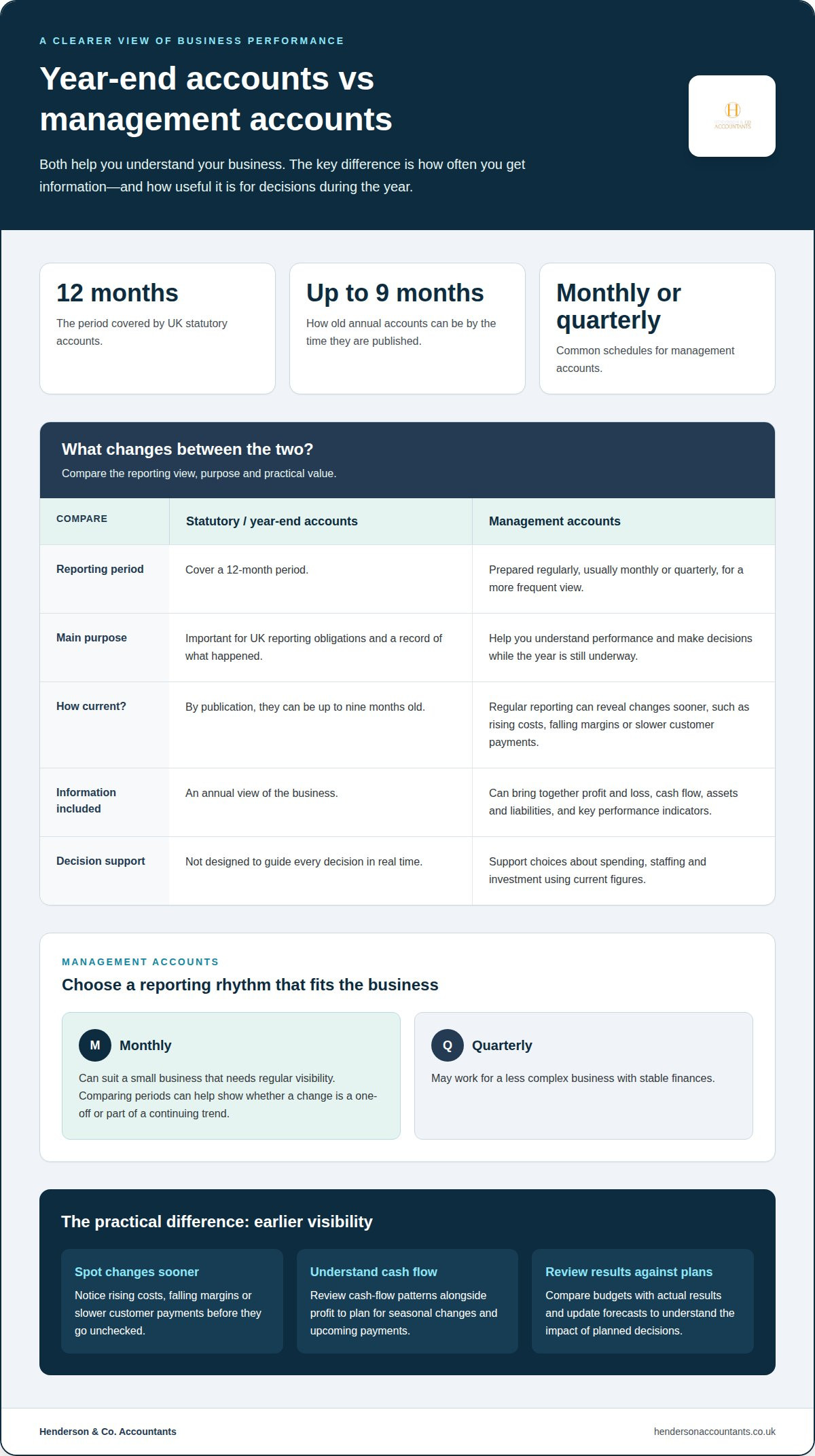
Management accounts are regular financial reports that help you understand your business’s performance and make decisions during the year. They can bring together profit and loss, cash flow, assets and liabilities, plus key performance indicators. UK statutory accounts cover a 12-month period, according to Companies House, while management accounts give you a more frequent view.
Statutory accounts remain important for UK reporting obligations, but they aren’t designed to guide every decision in real time. By the time annual accounts are published, they can be up to nine months old. Management reports can reveal changes sooner, such as rising costs, falling margins or slower customer payments.
The cost of preparing management accounts depends on factors such as reporting frequency, the condition of your bookkeeping and the reports or analysis you need. The price depends on the case and is given after a quote request.
Most businesses prepare management accounts monthly or quarterly. Monthly reporting can suit a small business that needs regular visibility, while quarterly reporting may work for a less complex business with stable finances.
Use current reports to guide decisions about spending, staffing and investment. For example, if software costs rise, reviewing monthly figures can help identify subscriptions that are no longer used. When overheads consistently creep upwards, working with cost-reduction specialists such as Expense To Profit can help organisations analyse supplier contracts and trim non-labour expenses. Comparing results across periods also shows whether a change is a one-off or part of a continuing trend.
Without regular reviews, warning signs may go unnoticed until they affect cash flow or profitability. Rising overheads, overdue invoices or falling sales can make it harder to respond early and plan payments. Regularly reviewing reports helps you spot these patterns and decide what action to take.
Clear, current information can support funding discussions with investors and lenders. Reports showing profit margins, overheads and performance trends offer a more up-to-date picture of the business. Investors can use the figures to understand where growth is coming from and consider whether it appears sustainable.
Acquirers may assess statutory figures that are 12 months or more out of date. Preparing management accounts six months to a year before a sale or refinancing can provide a fuller picture of recent trading and cash flow.
To establish a process, bring bookkeeping up to date, connect relevant bank and financial data, agree which reports and measures you need, then set a monthly or quarterly schedule. Make time to review the results and agree actions. This turns reports into practical information rather than figures that are simply filed away.
Measuring profitability by service line or department
Management accounts can reveal which parts of your business generate profit and where costs are reducing returns. Reporting by department, product, project or service line makes differences easier to investigate.
Financial reports for profitability analysis
A profit and loss report shows revenue, costs and profit, while a balance sheet sets out assets, liabilities and equity. A cash-flow report tracks money moving into and out of the business. Together, these reports help distinguish profitable activity from sales that tie up cash or rely on costly resources.
To compare areas fairly, use consistent categories and allocate shared overheads on a sensible basis. For example, a design agency could report fees and direct staff costs by project, then allocate software and rent across its teams. Comparing the results shows each project’s contribution without treating total business profit as the whole picture.
Choose reporting categories that reflect how your business operates. A retailer could separate product groups, while a construction firm could review project results. A service business might compare fees with team costs to see when staff have capacity or demand could support recruitment. Consistent categories also make comparisons between periods more useful.
For example, management accounts identified a loss-making service line after six months in one business. Repricing that service and investing in other lines increased profit by roughly £60,000 over the following year. The value lies in seeing which activity needs attention while there is still time to change pricing, costs or the focus of future work.
Margins and prompt change detection
Gross profit margin compares revenue with the direct costs of delivering products or services; net profit margin also accounts for overheads. Reviewing both shows whether higher sales are translating into stronger profitability. If direct costs rise faster than revenue, gross margin can fall even as turnover grows, signalling that prices or delivery costs may need attention.
Monthly comparisons can reveal a change earlier than relying on statutory accounts alone. In one example, a business with £1.8 million turnover missed a gross-margin decline for eighteen months, costing roughly £70,000 in profit by year end. Reporting gross margin by product or service can help uncover similar shifts sooner and focus analysis on the affected area.
Interpret each movement before acting: check whether a margin change reflects prices, materials, labour or the mix of work sold. For a business that needs support connecting departmental results to decisions, outsourced finance guidance can help turn profitability reports into a clearer view of performance.
Budgeting, forecasting and scenario planning
Management accounts connect your budget with actual performance, helping you understand your current financial position. Regular comparisons also provide a basis for updating forecasts and weighing decisions before committing resources.
KPIs and budget comparisons
Key performance indicators (KPIs) track measures such as sales growth, profitability and customer feedback. Budget comparisons show actual results against planned figures. Together, they help you assess whether the business is meeting its financial goals and where performance needs attention.
For example, compare revenue, direct costs and overheads with the budget. If sales meet expectations but costs exceed the plan, the figures may point to a margin issue rather than weak demand. Reviewing the relevant KPI alongside the budget helps explain the difference and gives managers a clearer basis for responding.
Choose measures that match your business priorities, then report them consistently. A service firm might track fees, team costs and project margins, while a retailer could monitor sales and stock-related costs. Monthly or quarterly reports become more useful when every period uses the same definitions and categories.
Budget accountability works best when managers can see the figures they influence. If marketing spending exceeds budget, discuss the variance with the marketing team and agree how to bring spending back on plan. That turns the report into a management tool rather than simply recording an overspend after it has happened.
Cash flow and budgeting
Management accounts support cash-flow budgeting by comparing expected income and payments with actual movements. This helps you assess whether planned spending fits the cash likely to be available, not just whether the business expects to make a profit.
For example, a forecast may show that a planned purchase coincides with lower customer receipts or higher supplier payments. Before committing, you can consider changing the timing, revising the budget or taking another approach. Forecasts should use realistic assumptions about when customers pay and bills fall due.
Scenario planning uses financial information to consider how different assumptions could affect your business. You might model lower sales, higher costs or a delayed project, then compare the effect on cash and profit. This helps you assess whether the current plan leaves room to respond if trading differs from expectations.
Update forecasts as actual results arrive instead of treating the original budget as fixed. A monthly review can reveal a persistent variance; a quarterly review can show whether it reflects a lasting change or a short-term movement. Record the assumptions behind each forecast so managers can understand why the position changed and adjust plans accordingly.
Monitoring actual results against business targets
Management accounts let you compare actual performance with targets over a chosen period. Reviewing sales, costs and cash movements together shows what’s on track and where action may be needed.
Sales, expenses and stock levels
Compare sales, expenses and stock levels with targets and previous periods. This helps you spot a shortfall, rising costs or stock changes before they distort the wider picture. Monthly or quarterly reports can show whether sales growth is keeping pace with expenses and whether stock levels reflect demand.
Compare periods fairly. A 19-day trading month will look worse than a 22-day trading month if reports don’t adjust for working days. For example, compare sales per working day as well as total sales. This distinction helps you judge performance rather than assume a shorter trading period signals weaker demand.
Use relevant measures together: sales growth, gross profit margin, net profit margin and overhead ratios. If sales rise but gross margin falls, increased turnover may not be improving profitability. If stock levels climb while sales stay flat, investigate whether purchasing or demand has changed. Each variance gives you a specific question to explore, rather than an unexplained gap against targets.
Cashflow monitoring and forecasting
Cash-flow monitoring compares expected and actual cash movements, while a forecast estimates the cash available across the accounting period. This matters because profit and cash aren’t the same: a business can report a profit while facing pressure on the money available to pay bills.
Working capital supports growth when suppliers and staff need paying before customers settle invoices. Track aged debtor balances and average payment times alongside cash movements. More overdue balances may point to weak credit control or a potential bad debt, while rising debtor days can indicate that cash is taking longer to reach the business.
A forecast can make those timing pressures visible. For example, a sample forecast shows January opening cash of £50,000, expected inflows of £120,000 and outflows of £100,000, leaving £70,000. February then opens at £70,000, with £90,000 expected in and £95,000 out, leaving £65,000. Comparing those projections with actual receipts and payments helps reveal when cash may tighten.
Review targets and forecasts together, then investigate the cause of each material difference. If customers are paying more slowly than planned, actions might include closer follow-up or revised payment processes. If costs exceed expectations, identify the category that changed. Recording the reason and response gives the next review a clear reference point.
Planning for seasonal income and cash-flow patterns
Seasonal trading can make monthly income uneven, while rent, wages and supplier bills continue. Management accounts help you track these patterns, forecast cash needs and decide what to do before a quieter period.
Compare results across the same seasons rather than treating every month as directly comparable. For example, a business with busy summer trading can review income, costs and payment dates from previous summer periods when planning for the next one. This helps distinguish predictable seasonal changes from an unexpected fall in demand or new cost pressures.
Cash-flow visibility matters even when sales and profit look healthy. Customers may pay after the business has paid suppliers or staff, leaving a temporary funding gap. Roughly two-thirds of failed SMEs cite cash flow, rather than a lack of profit, as the primary cause. A forecast of expected receipts and payment dates can reveal pressure early enough to consider practical action.
Track how long customers take to pay invoices and whether that changes during busy or quiet periods. If average payment times lengthen, follow-up may need to happen sooner, or payment terms may need attention. Reviewing aged debtor balances alongside expected supplier payments helps show whether cash is likely to arrive in time for upcoming commitments.
Seasonal forecasts can inform decisions about staffing, stock and planned spending. If income typically falls during a particular period, forecast the effect on cash before committing to additional costs. If the forecast shows room to invest during a stronger period, weigh the opportunity against upcoming bills and the cash needed to operate. Plan around expected timing, not sales totals alone.
Normalised cash flow helps show the business’s underlying financial pattern without unusual or one-off movements distorting the picture. This can matter when preparing for a sale and assessing surplus cash. At least 6 months of management accounts are recommended to demonstrate normalised cash flow for that assessment; ideally, use 12 months. A full seasonal cycle can help explain whether available cash reflects recurring trading or a temporary peak.
Review the forecast against actual receipts and payments, then record what changed and the action taken. If a seasonal dip lasts longer than expected, update assumptions and protect funds for wages, leases and suppliers. If cash builds during a strong period, consider future commitments before treating all of it as surplus. Plan seasonal cash flow with tailored financial support.
Henderson & Co. Accountants: Payroll and CIS Management
Henderson & Co. Accountants provides Payroll and CIS Management to help organise payroll information and support clearer financial reporting. This can be useful when staff costs are a significant part of your budget or regular payroll and CIS activity makes it harder to keep records current.
Accurate, up-to-date payroll figures help you understand employment costs in your management accounts and compare them with your plans. Henderson & Co. Accountants also provides Annual Accounts, eCommerce Accounting and Xero Cloud Accounting Setup to support related accounting needs as your business grows.
For support with Payroll and CIS Management, contact Henderson & Co. Accountants to discuss your business’s needs.
Make clearer financial decisions your next step
Understanding why businesses need management accounts is a starting point; the next step is making financial reviews part of how you run the business. Decide who needs the information, which decisions it should support and how often you’ll review it. A consistent routine turns reports into timely conversations about priorities, risks and opportunities, rather than figures you revisit only after a problem appears.
Henderson & Co. Accountants offers eCommerce Accounting, Xero Cloud Accounting Setup and VAT Return Preparation. These services can help businesses organise financial processes and keep important records current alongside day-to-day operations. The right focus depends on what your business needs to manage and the decisions you’re preparing to make.
If you’re ready to discuss practical support for your business, contact Henderson & Co. Accountants. A clearer reporting routine can give you a steadier foundation for the decisions ahead.
How Henderson & Co. Accountants can help with management accounts
Henderson & Co. Accountants provides bookkeeping, annual accounts and outsourced finance support for businesses that need help making use of financial information. Management accounts help you review performance and inform decisions; turn to the firm for support with the financial work behind that process.
Its services include an Outsourced Finance Director, an Outsourced Finance Department, eCommerce Accounting and Xero Cloud Accounting Setup, as well as VAT Return Preparation, Corporation Tax Returns, Payroll and CIS Management, and Company Secretarial Services.
Frequently Asked Questions
What are management accounts and what do they include?
Management accounts are internal reports that help owners and managers understand trading and plan decisions. A set might combine a profit and loss account, balance sheet, cash-flow information and selected performance indicators. Commentary can explain unusual movements, such as a change in product mix or a rise in a particular overhead. Reports can be tailored to the business’s structure and the questions its decision-makers need answered.
Why do UK businesses need management accounts?
UK businesses use management accounts to understand what changes between annual reporting points and decide how to respond. Businesses need management accounts to make decisions using current information, rather than relying only on past results. For example, a business considering a new project can review available cash, expected costs and recent performance before committing resources. Regular reporting can also support discussions with lenders or investors.
What financial reports are typically included in management accounts?
Typical reports include a profit and loss account, balance sheet and cash-flow report, with KPIs or budget comparisons where useful. A business may also request a breakdown by department, project, product or location. For example, a retailer could compare sales and costs across product categories, while a consultancy could review fees and staff costs by project. Commentary can explain the figures and highlight movements that need management attention.
How do management accounts support business decisions and performance tracking?
Management accounts give decision-makers a consistent way to compare current results with targets and investigate differences. If revenue meets its target but profit does not, managers can examine direct costs and overheads to understand the gap. A business can also track measures such as debtor days or sales growth over successive reporting periods. The value comes from discussing what caused a variance and agreeing an appropriate response.
What is the difference between management accounts and statutory accounts in the UK?
Statutory accounts are prepared for formal reporting obligations, while management accounts are designed to help guide internal business decisions. Companies House states that UK statutory accounts cover a 12-month period. They serve different purposes: management accounts can support planning during the year, but they don’t replace statutory accounts.
Are UK businesses legally required to prepare management accounts?
Small businesses in the UK generally aren’t legally required to prepare management accounts. Annual statutory accounts are a separate reporting requirement for companies. Even without a legal obligation to produce management reports, a business may use them to monitor cash, review costs or measure progress against targets. Reporting frequency and detail can reflect the business’s complexity and how often its owners need to make financial decisions.